
How to Make a Username You Can Keep
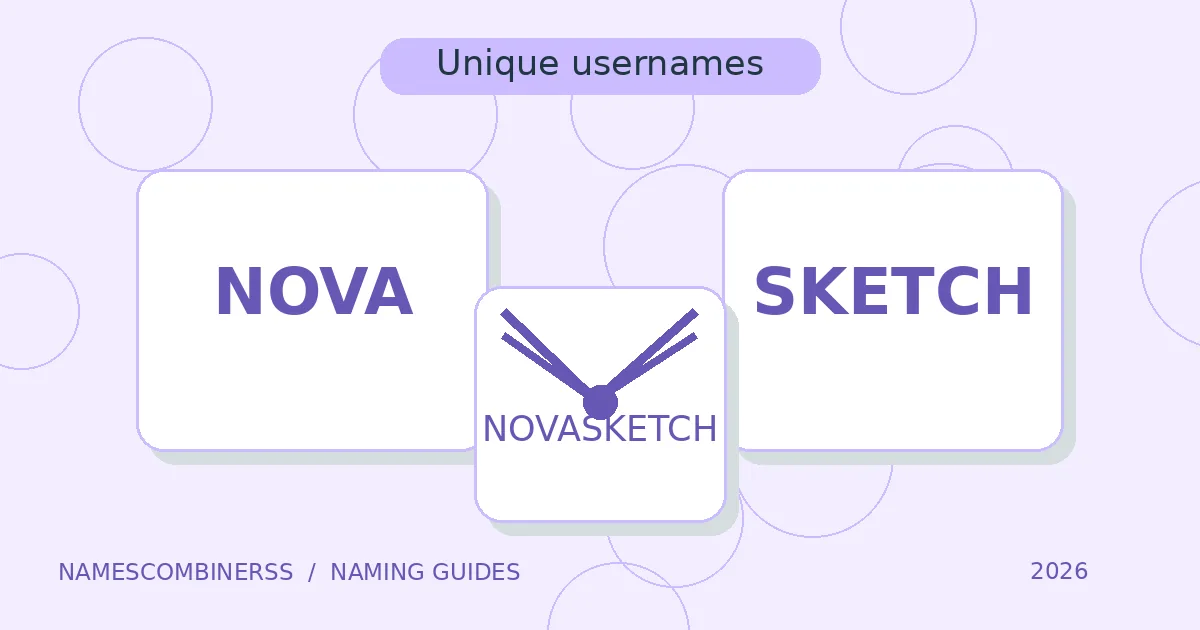
Choose simple, memorable online handles without promising availability.
Most usernames are seen briefly in a feed or search result. A good handle should be simple enough to read and recognizable enough to remember later.
Start with a clear base
Use a familiar name, short brand word, or nickname. If your first choice is taken, add one meaningful term instead of piling on random numbers. A readable term like “notes,” “studio,” or “daily” can communicate your purpose.
Consider consistency
Matching your usernames across social platforms makes it easier for friends or customers to find you. Still, the same string may be available on one service but taken on another.
Know the platform rules
Some platforms limit special characters or handle length. A generator cannot guarantee availability or compliance across all services. Check every candidate in the actual account settings before relying on it.
Protect your privacy
You do not have to include your full legal name or birth year. Consider a partial name or pseudonym where privacy matters. Never use a password or private identifier as part of a public handle.
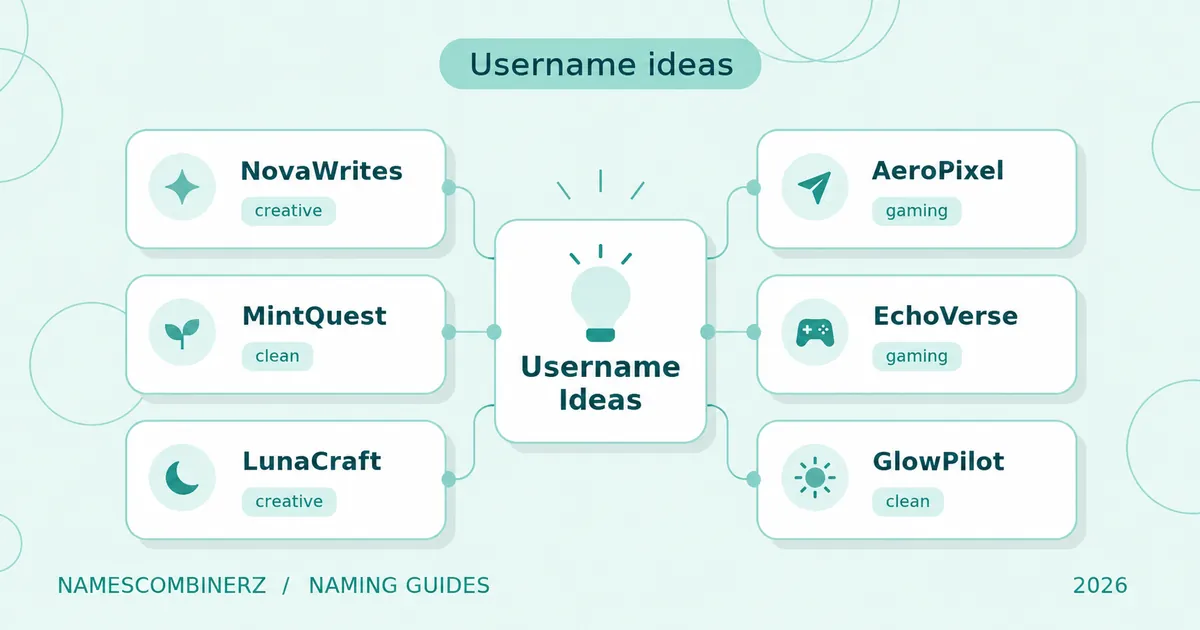
Use our Username Generator, then compare cleaner versions in the Instagram Username Generator.
A practical deep dive with real-world checks
Use the following steps in order if you are starting from scratch, or jump to the part that addresses your biggest obstacle. The goal is to produce a small number of ideas that are understandable, appropriate and easy to test. For public or commercial naming, distinguish a creative shortlist from checked availability and formal rights.
1. Choose the audience and purpose
A gaming alias can be playful, while a professional portfolio handle should be easy to share aloud. Creator accounts may need the same recognizable identity across several networks. Decide what the account communicates before adding decorative letters.
The underlying decision is about human recognition, not the largest number of generated variations. Work from a blank sheet rather than from a hundred automatic suggestions. Put your first three possibilities on separate lines and annotate which part of the idea comes from which source.
NovaSketch could suit a visual-art profile, while the same handle might be unclear for a local consultancy.
Try it yourself: Write a one-sentence profile description, then judge whether the name fits it. Use the observation to decide whether to keep, revise or discard the candidate.
2. Mix two meaningful word families
Combine a recognizable interest or skill with a distinctive but simple modifier. Contrast can make names memorable, as long as the two words do not form a confusing phrase. Avoid choosing every adjective from a list of fashionable terms.
A practical comparison helps distinguish your own familiarity from how the idea appears to a first-time reader. Try a blind read. Ask one person who has not seen your original inputs to describe what they notice first, then show them the construction.
Words related to design, plants, motion or music can be paired in different ways depending on the work you actually post.
Try it yourself: Create one column of honest interests and one of tone words, then cross-match a few pairs. Use the observation to decide whether to keep, revise or discard the candidate.
3. Avoid revealing private information
Full dates of birth, home addresses, school details and legal names can become security clues. A memorable handle does not need to encode information used for identity verification or account recovery.
This is where a short written test can prevent enthusiastic but inconsistent choices. Make the comparison reproducible by recording the exact version you tested and the reason it made your shortlist. For instance, if you change a vowel, keep both spellings long enough to compare them aloud.
Adding your exact year of birth to an already common username is easy but unnecessarily reveals data in many circumstances.
Try it yourself: Replace identifying numbers with a non-personal word if you need an alternate version. Use the observation to decide whether to keep, revise or discard the candidate.
4. Favor spellings that survive conversation
A handle full of dots, underscores, repeated characters and similar-looking digits is annoying to dictate. Platform rules also differ on supported symbols and length. Test a plain text version first.
Consider the environment in which someone will encounter the result without your explanation. Test the idea at realistic size and speed. A nickname in a text message, a business name on a receipt and a child's name spoken in a classroom place different demands on the same letters.
A listener may mix up lowercase L, uppercase I and the number one when hearing a handle on the phone.
Try it yourself: Say the username once, ask someone to type it, then compare character by character. Use the observation to decide whether to keep, revise or discard the candidate.
5. Check consistency across platforms
Look up the exact spelling on the services you intend to use, but do not rely on a single search result. Some accounts are hidden, reserved, disabled or unavailable in ways a third-party generator cannot verify.
Instead of asking for approval, look for an observable point of confusion or advantage. Look for disconfirming evidence, not just compliments. A shortlist becomes more trustworthy when you invite someone to identify confusing spelling, unintended resemblance or unfamiliar pronunciation.
A short handle might appear open on one website and unavailable on another, forcing a decision about whether consistency matters more than brevity.
Try it yourself: Maintain a small matrix of platforms and actual availability checks. Use the observation to decide whether to keep, revise or discard the candidate.
6. Search for accidental associations
A phrase that sounds clever to you can resemble a commercial brand, impersonate another creator or mean something unintended in another language. Search exact and near spellings, then review existing account profiles.
A sensible limit on brainstorming creates room to evaluate what you have already collected. Set the task a clear stopping point. Creative search can become endless because every candidate invites another variation.
A creator should avoid handles likely to confuse visitors into thinking the account belongs to a well-known company or person.
Try it yourself: Search both the spaced phrase and the compact username, then inspect images and account results. Use the observation to decide whether to keep, revise or discard the candidate.
7. Prepare a future-proof second choice
A handle can be occupied today and open later, or a platform can change naming rules. Prepare a clear alternative instead of relying on awkward punctuation or claiming ownership of a name you have not registered.
Some checks require information outside the generator and deserve their own place in the process. Keep an honest record of uncertainty. Some questions, particularly language meanings, trademark conflicts and account availability, cannot be settled by a blending algorithm.
If NovaSketch is taken, a project-specific addition such as Studio may read better than a random sequence of six digits.
Try it yourself: Save a primary, a short alternative and a descriptive long alternative. Use the observation to decide whether to keep, revise or discard the candidate.
8. Write a short, recognizable bio
Your handle and display name work together. Even when the username is creative, a one-line description can tell visitors what to expect, help people recognize the right profile and reduce mistaken follows.
The final goal is a usable idea, not proof that your creative method can always produce one. Finish by comparing a simple alternative. A creative transformation earns its place only when it works better for your purpose than leaving the words unchanged or choosing a familiar label.
A portfolio called an abstract name should immediately say it showcases illustration, UI work or photography.
Try it yourself: Pair the shortlist with a sample 100-character bio and a square avatar. Use the observation to decide whether to keep, revise or discard the candidate.
A reusable worksheet for your next naming session
Copy the prompts below into a note before generating a new batch. A written record is especially useful when you are comparing choices with another person or revisiting the idea after a few days. It turns an exciting but subjective naming session into a process you can review.
- Choose the audience and purpose: Write a one-sentence profile description, then judge whether the name fits it. Record one candidate, one observation and one change you would consider. Do not award a high score merely because the idea is new. The important point is whether the observation helps with username ideas that are memorable and safer in your actual setting.
- Mix two meaningful word families: Create one column of honest interests and one of tone words, then cross-match a few pairs. Record one candidate, one observation and one change you would consider. Do not award a high score merely because the idea is new. The important point is whether the observation helps with username ideas that are memorable and safer in your actual setting.
- Avoid revealing private information: Replace identifying numbers with a non-personal word if you need an alternate version. Record one candidate, one observation and one change you would consider. Do not award a high score merely because the idea is new. The important point is whether the observation helps with username ideas that are memorable and safer in your actual setting.
- Favor spellings that survive conversation: Say the username once, ask someone to type it, then compare character by character. Record one candidate, one observation and one change you would consider. Do not award a high score merely because the idea is new. The important point is whether the observation helps with username ideas that are memorable and safer in your actual setting.
- Check consistency across platforms: Maintain a small matrix of platforms and actual availability checks. Record one candidate, one observation and one change you would consider. Do not award a high score merely because the idea is new. The important point is whether the observation helps with username ideas that are memorable and safer in your actual setting.
- Search for accidental associations: Search both the spaced phrase and the compact username, then inspect images and account results. Record one candidate, one observation and one change you would consider. Do not award a high score merely because the idea is new. The important point is whether the observation helps with username ideas that are memorable and safer in your actual setting.
- Prepare a future-proof second choice: Save a primary, a short alternative and a descriptive long alternative. Record one candidate, one observation and one change you would consider. Do not award a high score merely because the idea is new. The important point is whether the observation helps with username ideas that are memorable and safer in your actual setting.
- Write a short, recognizable bio: Pair the shortlist with a sample 100-character bio and a square avatar. Record one candidate, one observation and one change you would consider. Do not award a high score merely because the idea is new. The important point is whether the observation helps with username ideas that are memorable and safer in your actual setting.
Once you have filled in the worksheet, compare the first draft with the version you would really be comfortable using. If the strongest candidate survives the tests, save it alongside the reason for choosing it. If the choice still feels uncertain, a small amount of focused testing is more useful than starting an enormous new list.
Frequently asked questions
Does a username generator verify availability?
No. It proposes ideas. You must check each platform directly, and platform rules can change.
Are numbers always bad in usernames?
No. Relevant, non-sensitive numbers can work. Avoid private dates and long random strings that make sharing difficult.
Can two platforms have the same handle?
Yes, when each platform permits it and it is available. Owning a handle on one service gives no automatic rights on another.
What if my first choice is already taken?
Try a clear subject or project modifier, not misleading characters that mimic the existing account.
What is the fastest way to test this idea?
For username ideas that are memorable and safer, start with choose the audience and purpose. Make a shortlist of three rather than a huge collection, then perform the specific test from the relevant section. Try it in a real sentence, a practical mockup or a neutral conversation. A small test tied to the intended audience is more revealing than a quick popularity poll.
How do I know whether a suggestion is actually useful?
For username ideas that are memorable and safer, start with mix two meaningful word families. A useful candidate should work for the stated purpose and survive the practical check that matters most: clarity, pronunciation, cultural fit or potential conflict. Write one reason it succeeds and one uncertainty to resolve. The result should still make sense after the exciting first impression fades.
Next steps: turn this research into a shortlist
Open our Username Generator to explore concrete variations. Generate broadly, save selectively and revisit the strongest choices after testing. For a different approach, compare the related Instagram Username Generator and Gamertag Generator tools. These links are exercises, not claims that every output is available or suitable.
Editorial note: This guide provides creative methods and practical checks; it does not certify origin, meaning, legal rights, platform availability or suitability for every culture. Review the results independently before making a permanent decision.
Turn what you learned into ideas.
Make a shortlist with our free name generator.